
Taiwan officially entered a super-aged society in 2025, and the demand for mobility aids will continue to grow. In addition to demographic changes, most Taiwanese homes are townhouses, walk-up apartments, mid-rise buildings, and high-rise buildings. Townhouses and apartments without elevators account for nearly 70% of all residences. Safety and convenience have become top priorities for older adults, and stair-climbing mobility aids can help improve daily movement at home. Today, we introduce the main types of stair-climbing aids available on the market and explore their advantages and disadvantages.
What Types of Stair-Climbing Mobility Aids Are Available for Seniors?
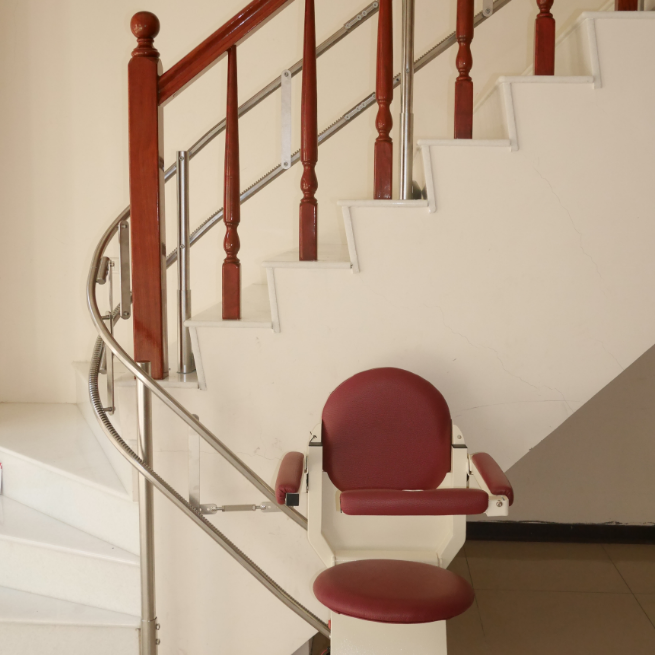
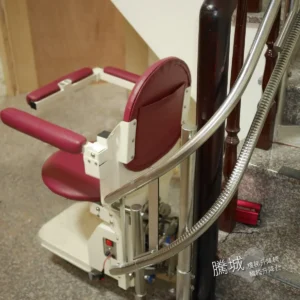
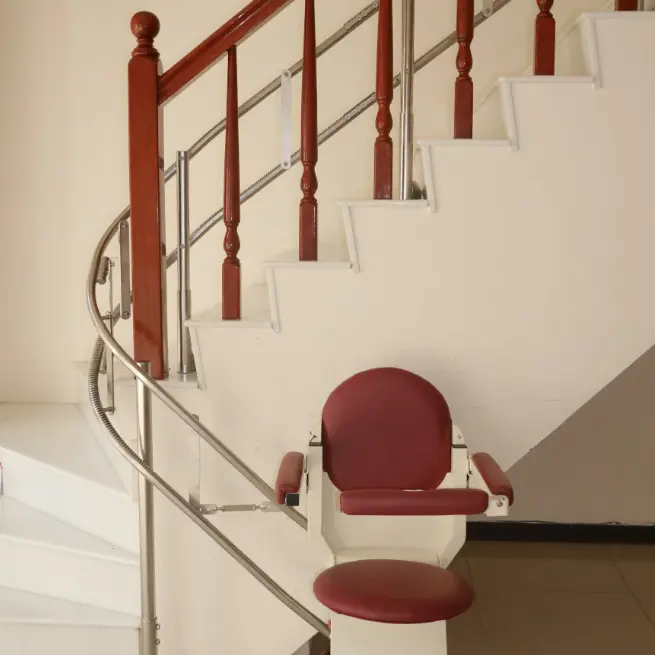
Stair Lift
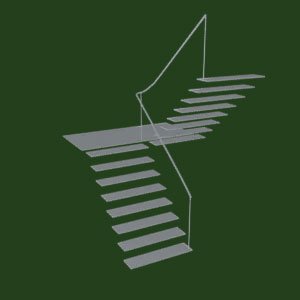
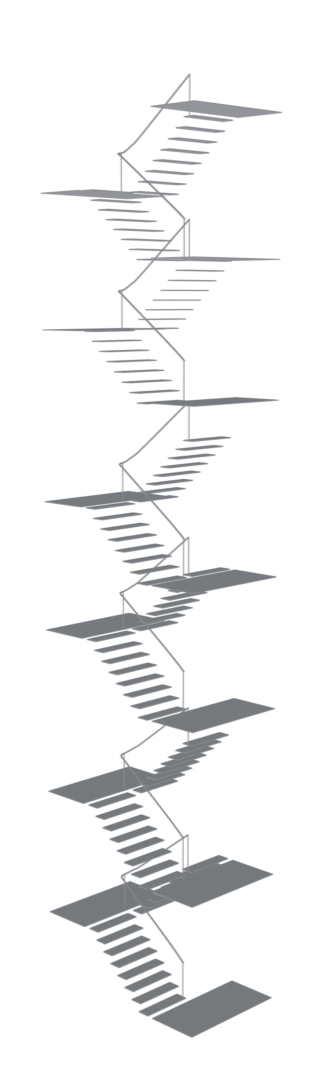
A stair lift is a motorized chair installed along the staircase. Users can sit on the chair and travel up or down along the rail. Stair lifts come in straight-rail and curved-rail versions, depending on the staircase design. Since every home has different stair shapes, widths, and turning angles, each stair lift must be fully customized.
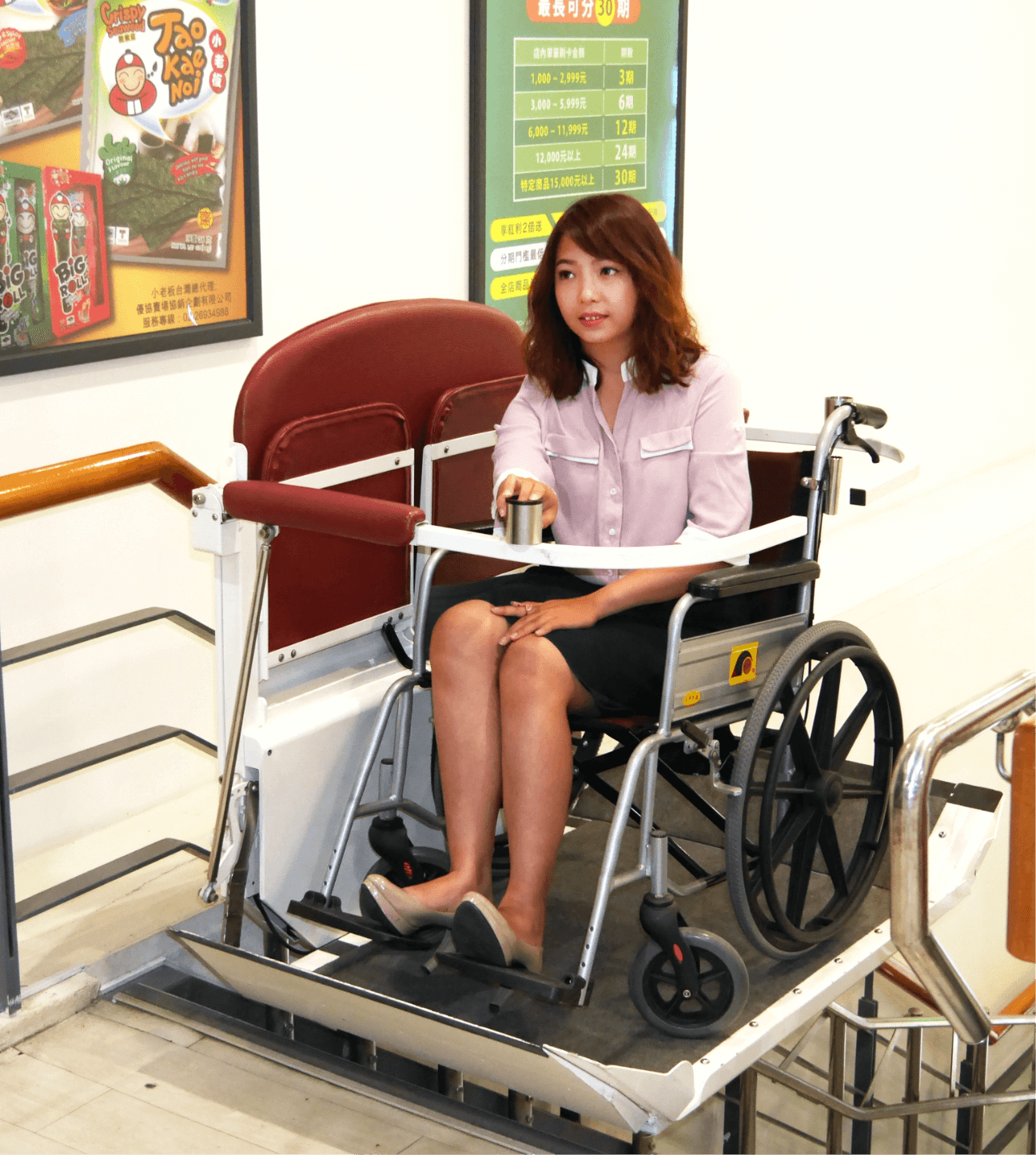
Stair-Climbing Platform Lift
The operating principle is similar to a stair lift, but the platform offers a larger surface area and higher weight capacity. This design is ideal for wheelchair users or those who need to transport goods. However, because the platform is larger, it requires more installation space. As a result, platform lifts are commonly installed in public spaces such as hospitals, schools, and shopping centers.
Stair Climber
A stair climber is a semi-automatic mobility aid available in pole-supported and track-type models. Both require manual operation. The mechanical design reduces physical strain, but the operator must receive proper training to understand the machine’s functions and techniques. Stair climbers are relatively affordable and do not require installation.
Home Elevator
A home elevator offers the most spacious solution, accommodating multiple people, large wheelchairs, or other mobility aids. Although convenient, installation is time-consuming and labor-intensive. A thorough assessment is required beforehand to ensure safety. For fully renovated homes, installing an elevator later may affect interior aesthetics and traffic flow. Removing it in the future would also be a major project.
What Are the Drawbacks of Stair Lifts?
Although stair lifts are fully automatic and cost-effective, they still have a few drawbacks:
1. Reduced Staircase Space
For already narrow staircases, installing rails further reduces usable space. It’s recommended to choose a foldable stair lift and confirm the space required for rail installation.
2. Slower Travel Speed
Stair lifts move slowly for safety reasons. If the chair moves too quickly, older adults may feel a sense of weightlessness, which can cause discomfort or anxiety.
3. Requires Power Connection and Regular Charging
Stair lifts are fully automatic and rely on electricity. They must be regularly charged to operate smoothly. Therefore, a power outlet must be available near the staircase, and users should develop the habit of charging the lift to avoid power loss during use.
Are Stair Climbers Easy to Use?
The biggest difference between stair climbers and other mobility aids is the need for manual assistance. Users must spend time learning and practicing, as improper operation may cause shaking or discomfort for the rider. Incorrect use may even lead to accidents, so proper training is essential.
If you prioritize safety and prefer not to spend time learning complex operation, a stair lift may be a better option.
Comparison Table of Stair-Climbing Mobility Aids
| Stair Lift | Platform Lift | Stair Climber | Home Elevator | |
| Typical Weight Capacity | Approx. 120 kg | Approx. 150 kg | Approx. 100 kg | 300 kg |
| Control Method | Fully automatic | Fully automatic | Manual assistance | Fully automatic |
| Safety | High | High | Average | High |
| Installation Time | 1 day | 1 day | No installation required | 1–2 months |
| Required Space | At least 70 cm width | At least 80 cm width | At least 80 cm width | Requires professional assessment |
| Price Range | Mid-range | Mid-range | Low to mid-range | Highest cost |
| Subsidy Availability | Yes | Yes | Yes | Yes |
Recommended Stair-Climbing Mobility Aid
We’ve introduced several common types of stair-climbing mobility aids — have you found one that suits your needs? We recommend the CF-150 platform lift, suitable for both people and wheelchairs. This multifunctional electric stair-climbing aid works well in homes and public spaces. Despite its larger size, it can still be folded to save space. If you’re interested in this stair lift, feel free to contact us!
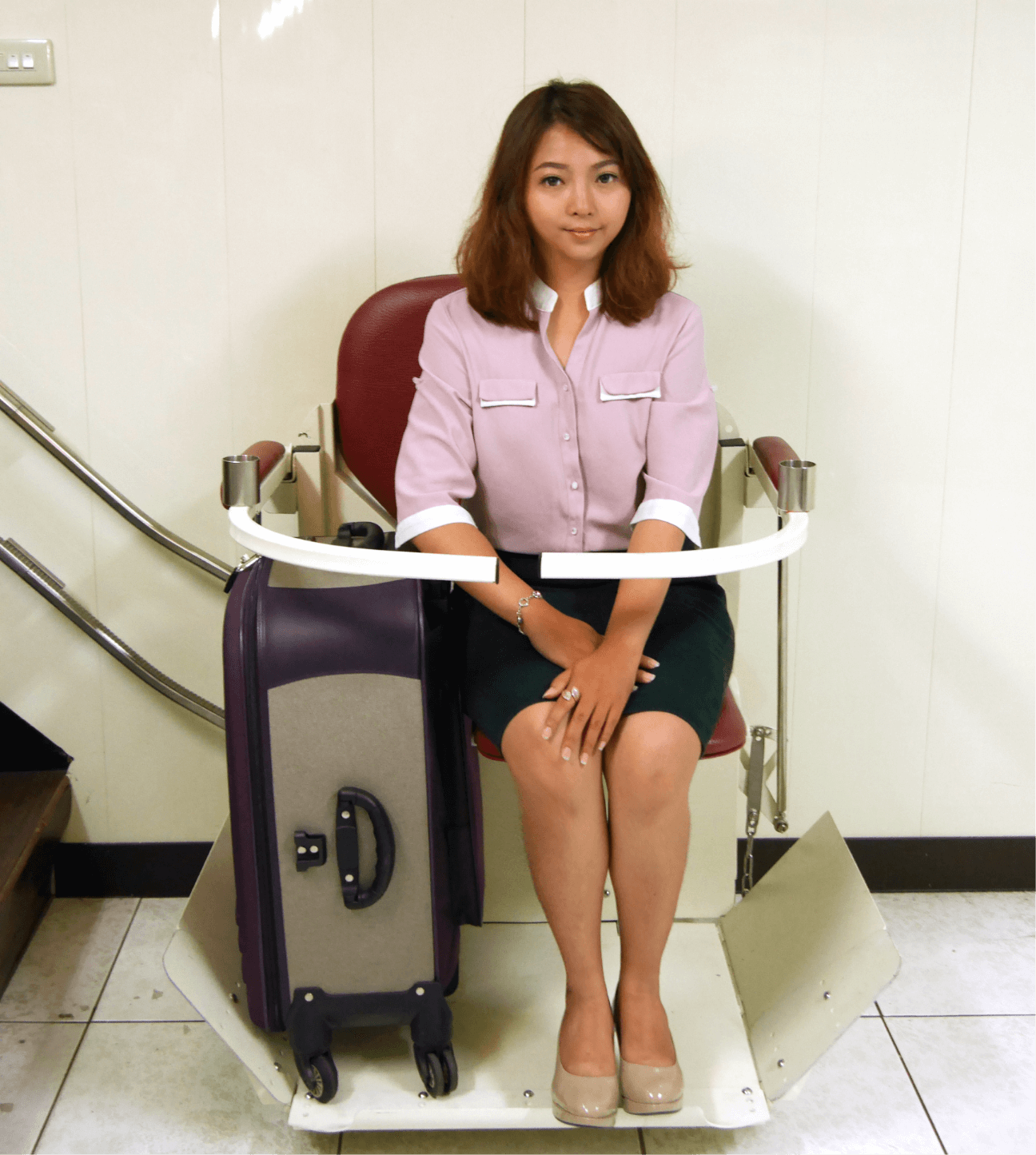
Specifications
- Rated Load: 150 kg
- Carrying Load: 120 kg
- Seat Dimensions: 70cm (L) x 50cm (W) x 100cm (H)
- Minimum Stair Width: 85 cm (customizable)
- Power: 24V motor
- Motor: 500W DC motor
- Rack Width: approx. 3.0 cm
- Rail Material: Solid stainless steel (SUS 304)
- Made in Taiwan