

Listen and follow
The Brand and Consumer Behavior
In Part I we explained that brand is the personal connections accumulated through positive experiences with a company, and stored in the customer’s subconscious mind.
In Part II we described the basic building blocks of brand to help you formulate a strategy — mission statement, differentiation, touchpoints, consistency, and storytelling.
In this Part III we peel back yet another layer, showing you how and why emotions are triggered . Diving into this fascinating topic about consumer behavior will give you a much deeper understanding of how it all works.

Fig. 1 – Understanding Consumer Behavior in Branding
Need a refresher? – “What is Brand? Secrets of Branding Part I”
How Brand Relates to Emotional Experience
A science teacher said to us once – “What is a memory but an emotion” – meaning we remember things because it has some emotional impact. And we develop personal connections with a company or brand through these same emotional experiences.
But what exactly is an emotional experience?
In the following sections, we explore how consumers are emotionally influenced by different types of stimuli. Understanding these interactions give you a much clearer picture of how branding works as a whole, providing a stronger framework for developing products, marketing campaigns, customer experiences, and overall brand strategy.
1.
Solving someone’s problem is a powerful emotional trigger.
When you help someone visualize how your product can solve their problem, you trigger emotions such as intrigue, excitement, relief, and hope.
This is the power of Brand Storytelling. The customer becomes the hero facing a challenge, while your company becomes the guide or mentor that helps them overcome it. This draws the customer into the narrative and compels them to follow the journey toward resolution.
Even neuroscience research supports the power of storytelling. MRI studies suggest that stories activate emotional and memory-related regions of the brain associated with the limbic system.
In Karen Eber’s TED Talk, she says that stories engage the brain far more deeply than data by activating sensory, emotional, and meaning‑making networks all at once. It creates empathy, builds trust, and makes ideas stick.
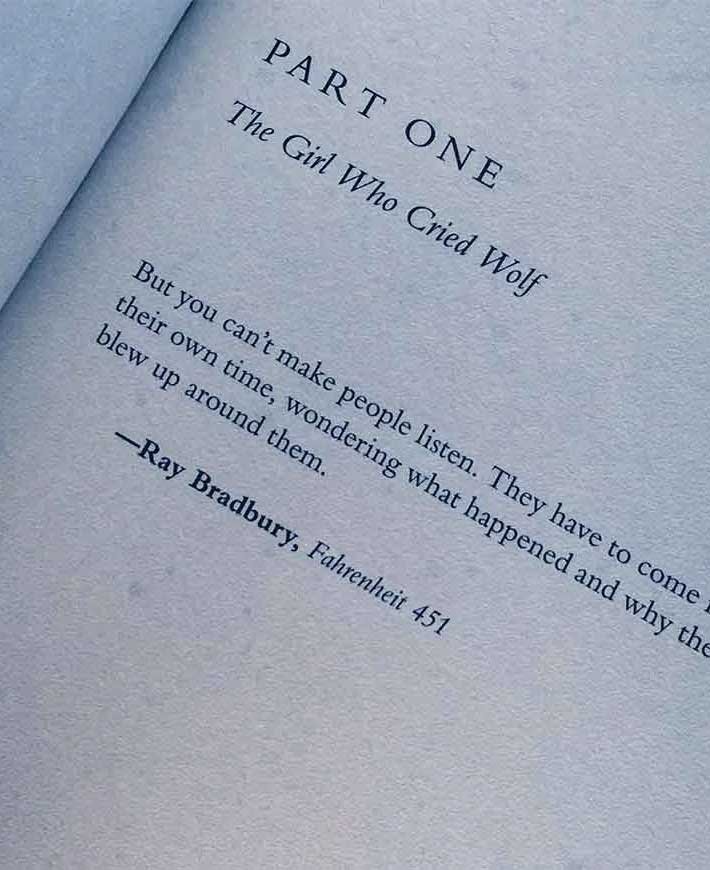
Fig. 2 – Brand Storytelling
In contrast, traditional marketing often relies heavily on features, specifications, and persuasive claims, which are easily lost in a sea of advertising. Stories, however, become emotionally encoded, making them far more engaging and easier to remember.
Learn more -“What is Brand Story“
2.
The Primal Forces are instinctive emotional needs.
There are primal forces that strongly influence human decision-making. These instinctive drives originate from primitive survival systems in the brain, often referred to as the “reptilian brain” — including the brainstem, basal ganglia, and cerebellum.
These forces can be summarized as the Six Ss:
- Safety
- Security
- Sustenance
- Sex
- Status
- Survival
These are powerful underlying behavioral needs that influence how people emotionally connect with products, services, and companies.
Take Starbucks as an example of how a brand can connect with Status. Starbucks maintains premium pricing partly to reinforce its image as a higher-end coffee experience. Imagine how someone may feel walking into the office holding a Starbucks coffee while others are carrying lower-cost convenience store brands. A cup of coffee becomes a subtle expression of identity and social perception.
In the table below, we outline the Six Ss and show how different brands connect with these instinctive emotional needs.

Fig. 3 – Primal Forces
The Six Ss
| Safety | Avoiding threat or risk | LifeStraw — portable water filtration for emergency survival. |
| Security | Seeking stability and control | Allianz Insurance — financial protection and predictability |
| Sustenance | Fulfilling physical or emotional nourishment | Blue Apron — meal kits that reduce effort and provide comfort |
| Sex | Appealing to attraction or desire | Calvin Klein Fragrances — iconic sensual advertising |
| Status | Asserting social dominance | Mercedes, Rolex and Starbucks |
| Survival | Urgency, resilience, continuity | Swiss Army Knife - all purpose tool for the outdoors |
Fig. 4 – Primal Forces – The Six Ss
Do This
Review your products, services, and customer touchpoints, and identify whether any of them connect with the Six Ss. Next, evaluate which of these connections genuinely support your mission and overall brand objectives.
These are the associations you can reinforce across all touchpoints to maintain consistency and strengthen your brand in the minds of consumers. These primal associations can also inspire ideas for product features, customer service improvements, or marketing content.
However, it is important not to force the Six Ss onto your brand. These connections must emerge naturally and remain aligned with your core brand identity.
3.
There’s a Wide Range of Human Emotions
We have already discussed how emotional connections are strengthened when a brand successfully evokes an emotional response such as happiness, joy, achievement, or confidence.
There are many different emotions you can design for in branding — see Figure 6.
For example, Starbucks baristas often write customers’ names on cups and call them out when the order is ready. This simple interaction can create a feeling of “belonging” or “family.” This aligns directly with Starbucks’ brand focus: nurturing the human spirit.
It is also important to note that emotional triggers do not have to be positive. Human attention is equally activated by negative emotions, which is why they are often used in communication and marketing. For example, UNICEF’s “For Every Child” campaigns use images of global hardship to raise awareness and drive action.
Fig. 5 – Emotional Triggers
Core Positive Emotions
- Joy
- Hope
- Love
- Pride
- Achievement
- Inspiration
- Confidence
- Gratitude
- Serenity / Calm
- Comfort
- Empowerment
- Belonging
- Validation
- Anticipation
- Awe / Wonder
Core Negative (but powerful) Emotions
- Fear
- Sadness
- Anger
- Urgency
- Rebellion
- Justice / Fairness
- Protection
- Nostalgia (bittersweet)
Cognitive / Motivational Emotions
- Curiosity
- Surprise
- Identity / Self‑expression
- Transformation
Commonly used emotional characteristics for Brands
| Relief | The feeling of pressure being lifted. | Used by: insurance, healthcare, cleaning products, financial services. |
| Gratitude | Feeling thankful for help, service, or kindness. | Used by: hospitality, nonprofits, caregiving brands. |
| Serenity / Calm | A sense of peace, quiet, or mental stillness. | Used by: meditation apps, spas, wellness brands. |
| Curiosity | The desire to explore, discover, or learn more. | Used by: tech, education, entertainment, gaming. |
| Awe / Wonder | Feeling small in the presence of something vast or beautiful. | Used by: travel, nature brands, luxury, space/tech. |
| Validation | Feeling seen, understood, or affirmed. | Used by: identity‑driven brands, beauty, lifestyle communities. |
| Empowerment | Feeling capable, strong, or in control. | Used by: fitness, financial independence, self‑improvement. |
| Rebellion | The thrill of breaking rules or rejecting norms. | Used by: Harley‑Davidson, streetwear, youth culture. |
| Urgency | Fear of missing out or running out of time. | Used by: retail, limited drops, ticketing. |
| Comfort | Emotional or physical soothing. | Used by: food, home goods, apparel. |
| Justice / Fairness | The desire to right a wrong. | Used by: activism, sustainability, challenger brands. |
| Protection | The instinct to guard loved ones or oneself. | Used by: home security, parenting products, insurance. |
| Identity / Self‑expression | The need to show who we are. | Used by: fashion, tech, lifestyle brands. |
| Belief / Faith | Not religious — but the feeling of conviction or purpose. | Used by: mission‑driven brands, movements, communities. |
| Transformation | The emotional arc of becoming something new. | Used by: fitness, education, coaching, beauty. |
Fig. 6 – Branding by Emotion
4.
Emotionally Connecting with People’s Values
Consumers often form strong emotional connections with brands that reflect their own personal values. These values may include environmental conservation, philanthropy, education, ethical sourcing, global aid, animal welfare, and many others.
When a brand aligns with a customer’s belief system, the relationship becomes deeper than product functionality — it becomes identity-based.
Some examples of companies and their associated brand values:
- Patagonia – conservation, environmental responsibility, sustainable materials
- TOMS – “one for one” model: buy a pair, donate a pair
- Warby Parker – buy a pair, give a pair to someone in need
- Starbucks – ethically sourced coffee and sustainability initiatives
- Apple – creativity, individuality, “Think Different” culture

Fig. 7 – Patagonia is Environmentally Responsible

Fig. 8 – Buy a pair, donate a pair
In the case of TOMS Shoes, the company achieved significant success through its philanthropic and socially conscious brand model. Warby Parker followed a similar path, building strong emotional loyalty through social impact.
Apple gained cultural distinction by challenging established corporate norms in technology (IBM), positioning itself as a brand centered on a new generation of creative individuals who think differently.
5.
The Five Senses – Immersive Brand Experience
Our five senses (sight, smell, taste, sound, touch) can also offer opportunities to help your branding efforts. Brands speak louder when they stimulate these.
Here is how Starbuck’s does it.
| Sense | Starbucks Application |
|---|---|
| Sight | Italian-inspired décor, warm tones |
| Smell | Signature coffee roast aroma |
| Taste | Flavored drinks, pastries, seasonal blends |
| Sound | Soft jazz, espresso machines’ humming away |
| Touch | Comfortable sofa chairs |
This multisensory strategy turns a cup of coffee into a coffee experience, all focused on “Nurturing the Spirit”.
Again, it’s important not to force these. We don’t recommend placing aroma atomizers in your offices and showrooms if it has nothing to do with your brand and mission.

Fig. 9 – Sensory Triggers
Conclusion – Humans are Driven by Emotions
Humans are sentient animals and are influenced by emotional experiences that embed in our subconscious and influence consumer behavior.
So it makes sense to understand how and why emotions are triggered.
In this Part III, we presented 5 essential aspects of human emotional responses that you can consider for your customer experience.
- Solving Problems
- Six Primal Forces
- Human Emotions
- People Values
- Four Senses
Again we must emphasize that it’s important to note that your considerations should always be aligned with your Brand and Mission.
We hope we have given you a solid foundation for considering the powerful application of Brand Strategy into your business. If you have questions, please contact us below, or write a comment in the comment box below.

Fig. 12 – Branding Iceberg
Brand Summary – Part I, II and III
We described what Brand is in Part I. We listed the Basic Building Blocks of Brand in Part II. And in this article Part III, we talked about Brand Psychology.
In this last section, we summarize all the brand concepts in a Big Picture diagram, Starbucks Strategy Table, and a real world Case Study.
The Big Picture
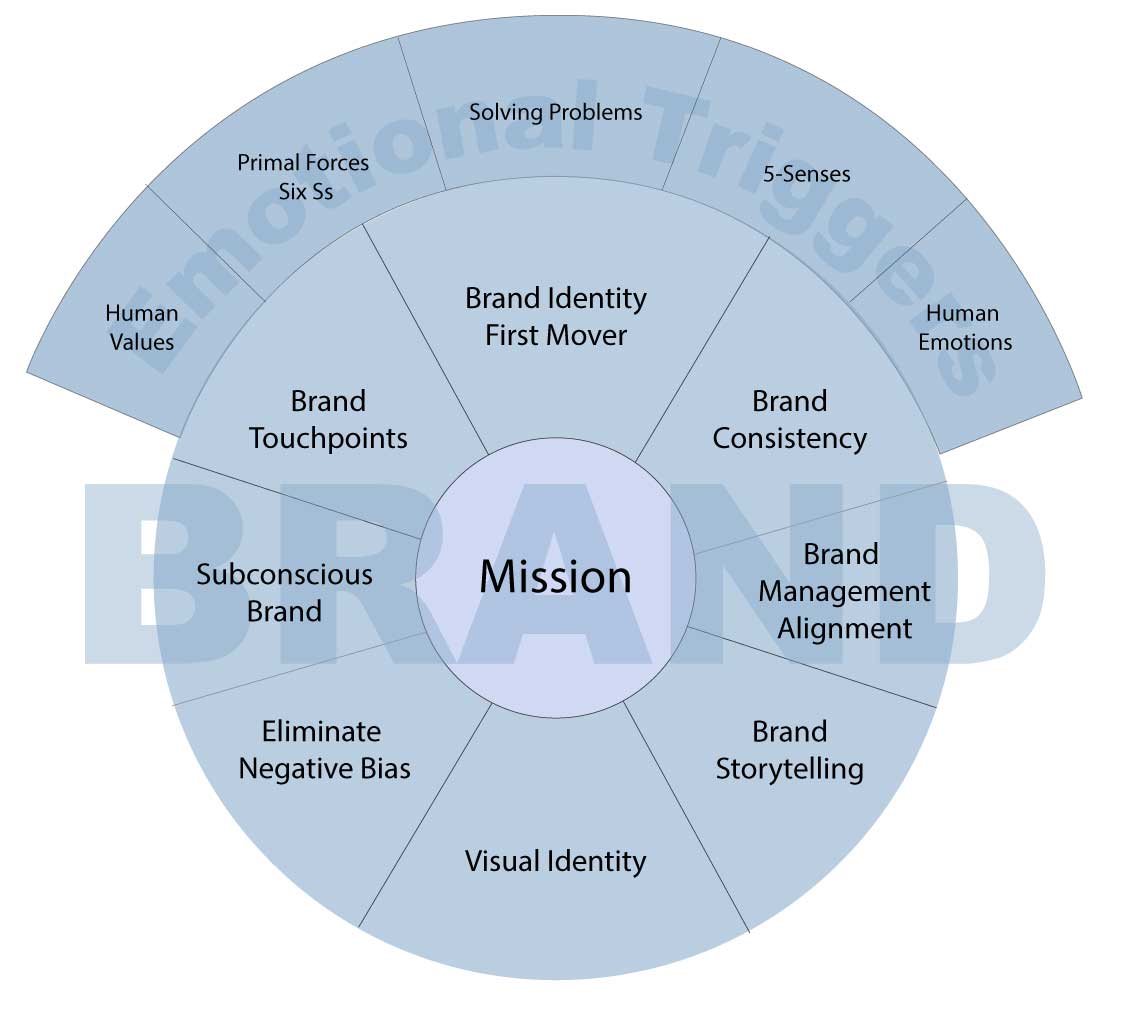
Fig. 10- Branding Big Picture
Starbucks Brand Strategy
| Solid Mission Statement | Nurture the Human Spirit, a person, a cup, a community at a time. |
| Consistency/Familiarity | No matter San Francisco, Singapore, customers know they'll get familar experience. |
| Stimulate 4 senses | Visual (Italian Decor), Taste (cinnamon rolls), Sounds (soft jazz), Smell (roasted coffee, fresh bathrooms) |
| Emotional Triggers | Belonging, relaxation, self-improvement |
| Filling needs | Get away from home / office (third place), solitude and peacefullness |
| Values | Ethically sourced coffees |
| 6 Primal Needs | Status, Sustenance (food & emotional), Safety (clean bathrooms) |
| Differentiation / Brand Identity | Starbucks not only serves coffee, it gives customer a whole new coffee experience - Nurture the Human Spirit. |
Fig. 11 – How Starbucks does it.
Case Study Listen and follow
A Case Study in Successfully Building a Brand
I consulted with a small-to-mid-sized company in Taiwan that had a line of scientific light meters for various professional applications. Light meters are precision instruments whose market is largely dominated by major Japanese companies such as Konica Minolta and Sekonic.
Sizing up the competition
The first thing I noticed was that Konica Minolta and Sekonic both had traditional instrumentation-style websites, featuring large catalogs of products and technical specifications. However, they lacked educational content around light measurement, lighting science, and practical applications of their instruments.
It seemed they assumed their customers already understood what they were buying and why. This gap became our opportunity to differentiate.
Determining the mission statement
Most Taiwan-based companies do not have clearly defined mission statements, and this was also true for my client. So the first step was to develop a meaningful mission that would clearly distinguish us from larger competitors.
We defined the mission as:
“Become the Light Meter Authority by helping others explore, learn, and discover the world of light and color.”
This also became the foundation of the brand strategy.
Emotional branding
We wanted customers to feel a sense of confidence and security in our position as the “authority” in light measurement. By educating them on light science and lighting applications, we aimed to create a sense of learning, clarity, and professional growth.
Infusing the brand and mission into touchpoints
The company already had a strong product line of high-quality light meters. While the technology was advanced, the specifications and features were not significantly different from competitors.
So we shifted the focus to creating touchpoints that educated the market on light, color, and measurement principles.
We began by writing four extensive handbooks on light science and light meter applications, ranging from 50 to 150 pages each. These were extremely well received and, according to the CEO, became the “bibles” of the industry.
Using digital marketing to amplify the brand
We distributed these handbooks through the company website in exchange for email sign-ups and permission to send occasional updates about new articles and product developments.
We also created educational articles and published them on the website, using the growing email list to encourage continued learning about light and its applications. In addition, we shared content through platforms such as LinkedIn.
Consistency and alignment
We published one to two articles per week. While this required significant effort at the time, it is now far more efficient with the support of AI tools.
We also retrained the sales team in light science and light meter applications. This enabled them to deliver more informed presentations and reinforce the company’s authority in the field, while encouraging other teams to adopt the same approach.
Monitoring branding efforts
We used digital tools such as Google Analytics, Ubersuggest, and Mailchimp to track performance and measure progress.
These tools allowed us to monitor growth in traffic, engagement, and customer acquisition with clear, data-driven insights.
The Results
We discovered that beyond scientists and academics, there was a much larger audience of professionals and businesses who could benefit from light meters—if they better understood their applications.
After launching the educational content strategy and digital marketing efforts, the results within six months were significant:
- Email list quadrupled
- Website traffic doubled
- Meter sales increased by 18%
According to the CEO, the company’s “authority” in the market had clearly strengthened, and digital marketing had proven highly effective.
Final takeaway
This case demonstrates that building a brand is not a quick fix. It requires strategy, consistency, and time—but it is achievable for companies of any size.
Even small companies can compete in markets dominated by large brands by clearly defining a unique mission and building trust through education and value creation.
Ultimately, branding is about making a meaningful difference for customers in a way no one else is doing.
“Helping others explore, learn, and discover the world of light and color.”
References:
The Brand Gap – How to Bridge the Distance Between Business Strategy and Design – Marty Neumeier (Copyright 2006)
The Power of Instinct – The New Rules of Persuasion in Business and Life – Leslie Zane (Copyright 2024)
Subliminal – HowYour Unconscious Mind Rules Behavior – Leanard Mlodinow (Feb 12, 2017)
Thinking, Fast and Slow – Daniel Kahneman (Oct 25, 2011)
If you are looking to boost your Brand and Marketing efforts please contact us.
Q and A
What is consumer psychology in branding?
Consumer psychology in branding is the study of how emotions, memories, instincts, and personal values influence how people connect with brands and make purchasing decisions. Strong brands create emotional experiences that become embedded in the customer’s subconscious mind.
Why are emotions important in branding?
Emotions help people remember experiences and form personal connections with companies. Brands that trigger emotions such as hope, belonging, confidence, comfort, or inspiration are more memorable and influential than brands that rely only on product features or specifications.
What are the Six Ss in branding?
The Six Ss are primal emotional drivers that influence consumer behavior:
- Safety
- Security
- Sustenance
- Sex
- Status
- Survival
These instinctive needs affect how people emotionally connect with products, services, and companies.
How does Starbucks use psychology in branding?
Starbucks uses multiple psychological branding techniques including emotional triggers, sensory experiences, status perception, consistency, and community belonging. Its stores combine visual design, aroma, music, taste, and atmosphere to create a recognizable emotional experience.
Can negative emotions be used in branding?
Yes. Branding does not always rely on positive emotions. Emotions such as fear, urgency, sadness, justice, or protection can also attract attention and motivate action. Organizations such as UNICEF often use emotional awareness campaigns to encourage support and social action.
Why do people connect with brands that share their values?
Consumers often support brands that reflect their personal beliefs and identity. Shared values such as sustainability, philanthropy, ethical sourcing, creativity, or social responsibility create deeper emotional loyalty beyond product functionality.
How do the five senses affect branding?
The five senses — sight, smell, taste, sound, and touch — help create immersive and memorable brand experiences. Sensory branding strengthens emotional associations and increases familiarity, making a brand easier to recognize and remember.



0 Comments