

Listen and follow
(Approx. Read 9 min.)
Building a Great Brand
In Part I, we pulled back the curtain on branding and showed that brand is not your logo, color scheme, or website design. A brand lives in the customer’s subconscious as emotional “connections” formed through positive experiences they’ve had with your company.
So where do you go from here?
You need a strategy that ties all of this together to help you start to build your brand. And while no single article can teach you everything end‑to‑end, we can reveal the underlying forces that are important to build a successful brand.

Figure 1 – Pulling it all together
Need a refresher? – “What is Brand? Secrets of Branding Part I”
7 Pillars of Building a Brand
If a brand is a collection of emotional connections in our subconsious brain, then building a brand is the process of intentionally creating and reinforcing those connections. Below are the 7 important foundations to building a brand to achieve that.
1.
Start with Mission Statement – The Soul of a Brand
Every strong brand needs a starting point, and that is the mission statement. It’s the underlying force that shapes how your brand forms in the subconscious of customers, employees, and investors.
Simon Sinek famously says that people don’t buy what you do – they buy why you do it. Your mission is the clearest articulation of that “why.”
Even though it isn’t front‑and‑center in daily operations, the mission quietly sets the tone and context for every activity in the company — especially branding.
A brand without a mission has no identity, and no direction.
You can find Simon Sinek here.

Figure 2 -Simon Sinek explains that people follow you not because of what you do, but why you do it.
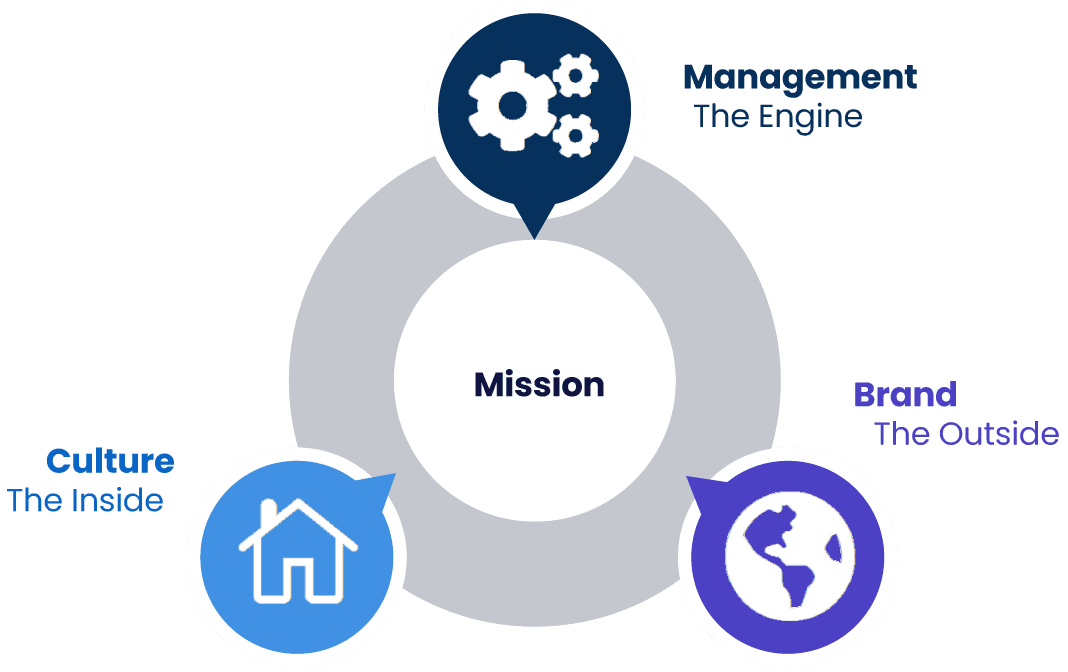
Figure 3a – The Mission lies at the center of all activities including Brand.
Being the Best is not a good mission.
A common mistake I see with Mission Statements is “being the best” at something.
You may feel your products and services are “the best” for some of these qualities:
- good quality; reliable, durable
- good materials; lightweight, non-corrosive
- good performance; fast, quiet, efficient
- number of features
- standards compliance
There’s only one problem – your competitors are probably focusing on the same generic qualities. If they do not stack up to your products now, they will catch up in due time.
You need to find your niche another way.

Figure 3b – How do you stand out in a sea of competition?
Find your Market Niche – Become a First Mover
As we mentioned, most products in the market become similar over time – they eventually reach commodity status, followed by price wars.
You can avoid this by distinguishing yourself as a “first mover“, unrelated to general features like “quality” and “performance”.
You become a first-mover by …
- Solving a problem or
- Filling a need or
- Connecting with Customer Values
… in a way no one else is doing.
Becoming a first mover sets you apart from the pack, helps you maintain market share over time, even as similar products flood the market.

Figure 3c – Finding Your Niche
See how Starbucks does it.
It helps to revisit the Starbucks mission, the “Why”.
“To nurture the human spirit, one person, one cup, one neighborhood at a time”
Anyone can make a cup of coffee – but Starbucks makes a difference by solving problems, filling needs and connecting with people’s values. Their mission does not focus on the quality of their coffee.
Instead, their mission is about uplifting their customers by inventing a unique coffee culture that nurtures the spirit and inspires life. And this is what sets Starbucks apart.

Figure 4 – Nurture the human spirit — one person, one cup, and one neighborhood at a time.
Think about this.
What’s your company mission? What drives your company to make a difference for your customers, your employees, your investors – that no one else is doing? Figuring this out will help you set yourself apart and become a first mover.
2.
Eliminate Negative Experiences – Touchpoints
Assuming you already have a company and a product, the first priority is removing weak or negative associations.
Every interaction a customer has with your company is a touchpoint:
- product features, quality
- customer service
- store environment
- user manuals
- UX / UI
- returns process
- cleanliness
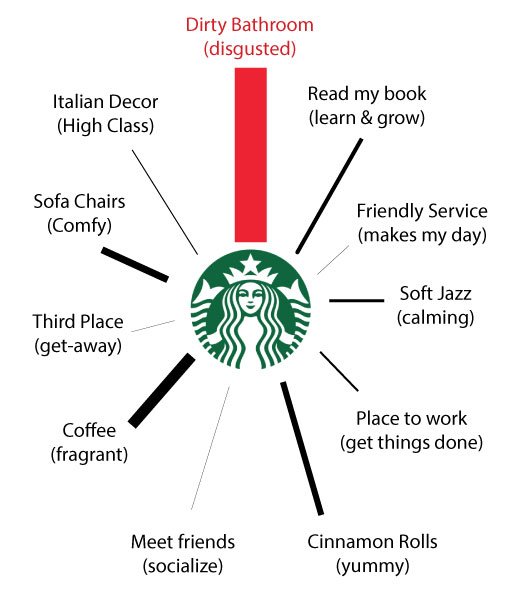
Figure 5 – A dirty, smelly bathroom will turn off any cusutomers, and maybe for life.
Negative experiences at any touchpoint carry disproportionate weight because of negative bias, our tendency to remember bad moments more strongly than good ones. A single negative touchpoint can undermine the brand trust you’ve worked hard to build.
That’s why attention to every touchpoint is essential in branding.
Do This
List all of the touchpoints for your products and review any weaknesses or conflict. You can also review emails, customer reviews, social media to discover any flaws or contention with your products or services. Next you need to strengthen those weaknesses and protect the brand.
3.
Build products and establish touchpoints that support your mission.
Your products and touchpoints should support your brand and mission objectives.
Assess how your mission is represented in all of your touchpoints. Though market forces will pull your product in different directions, you should still build products and touchpoints with your mission in mind. Why?
Because your mission identifies your brand identity in the market – if your products and touchpoints don’t represent that, your Brand may be viewed no different than the others.
Let’s look at how Starbucks does it.
Look at all the touchpoints in Figure 6 that support the Starbucks mission, “Nurture the Human Spirit” – they are all carefully curated and consistently maintained. You won’t find Pizza Night or Rock-n-Roll music at a Starbucks because it doesn’t support the mission.
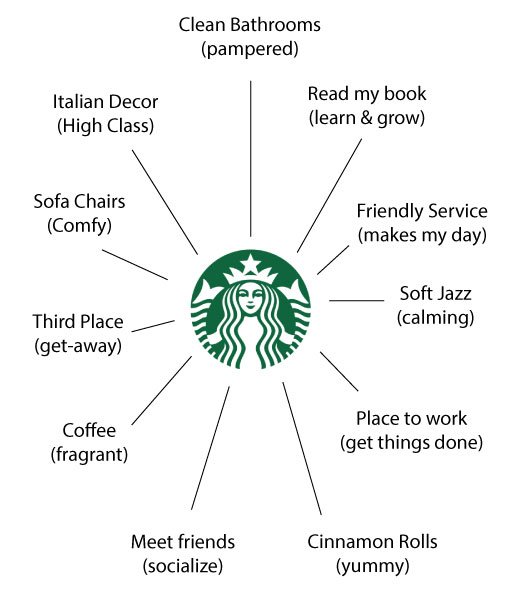
Figure 6 – Touchpoints that Nurture the Spirit
4.
Practice Consistency – Familiarity builds strong bonds
Steve Jobs once grew frustrated that the chips on a circuit board weren’t perfectly aligned, even though they were hidden beneath the case. It wasn’t perfectionism — it was about staying true to Apple’s Brand identity, Technology + Style.
That same attention to consistency shows up in Apple Stores, user interfaces, packaging, and advertising. It’s a major reason Apple maintains its leadership with every touchpoint reinforcing the same familiar experience.
Starbucks does it too.
When I walk into my local Starbucks, the smells, tastes, sounds, and ambience are always familiar. Even the bathroom is consistently clean and pleasant.
As I visited stores in other states, I could still drop into the same “Third Place” I love. Now that I’m in Taiwan, it still amazes me how Starbucks feels like home in a completely different culture — and yes, the bathrooms are still immaculate.
Consistency is the main ingredient that builds bonds with a home-sweet-home familiarity. They shape how people experience you, remember you, and trust you.

Figure 10 – Familar Starbucks Atmosphere
5.
Manage your Brand – Discipline and Alignment
As a company grows, it’s easy to drift from the brand mission. Products start to lose their market identity, internal tensions emerge, and marketing begins sending mixed signals.
Brand management is the discipline that keeps the organization on course. It ensures that every decision, product, and message continues to uphold the tenets of Mission and Brand.
In larger companies, this responsibility becomes formalized through Brand Departments, Brand Managers, or even Brand Governance teams. Their role is simple but essential: maintain alignment and protect brand consistency as the organization grows.

Figure 11 – Managing your Brand
6.
Establish your Visual Identity – Brand Design
So where do logos, colors, and website design fit in? Though they are only the surface layer of a brand, they matter because first impressions still count.
Designers rarely create from a blank page. A clear Mission and Brand direction is the seed that lends context and inspiration for the creative process and keeps design from becoming arbitrary.
Also, make your visuals as attractive as possible, but remember the core goals of “visual brand design”:
- Simple
- Unique
- Easy to remember
But visual design rarely makes or breaks a brand on its own. Visuals become memorable and beloved because your Mission, Alingment, Consistency, and other branding efforts give them meaning. When the foundation is strong, the visuals feel coherent, intentional, and unmistakably yours.

Figure 12 – Simple, Unique, Easy to remember
7.
Use Brand Story in your Marketing Efforts
Writing marketing content can feel exhausting. It often turns into repeating specs, features, and persuasion that sound all too familiar.
Brand Story changes that. But it’s not a story about your company or your products.
A Brand Story is about your customer — their problem, their journey, and how your product and mission helps them achieve meaningful change. This is how your marketing teams should develop content.
This approach works across everything: web articles, DMs, videos, presentations, and more. And it’s never repetitive, because different problems creates a different customer stories.
Most importantly, Brand Story gives writers a structure. Instead of forcing creativity, it provides a clear narrative arc that makes content easier to write and compelling to read.
Learn more about Brand Story here.

Figure 13 – Brand Story Marketing
How long does It take to see results?
Brand requires some effort and time. You first have to establish your brand, and then you need to gain traction. And the time it takes to see results from branding depends on where your brand is currently and how much effort you can give.
However, you can speed up the process with Digital Marketing, rather than traditional marketing, which is much more time consuming and people intensive.
Digital Marketing, uses the vast resources on the web to help customers find you and vice versa. And it’s done at the speed of the internet from the convenience of your office.
That said, we have worked with Taiwan companies that have good products but with weak brand and marketing. In a 6 month period we were able to double website traffic and increase sales 18%. (See Case Study in Part III).
Learn about Digital Marketing here.

Conclusion – Build a successful Brand
In this Part II we peeled back another layer that explains 8 Foundational Aspects of Branding to help you start to build your Brand.
- Start with Mission Statement.
- Eliminate Negative Experiences.
- Build products and touchpoints to support the mission.
- Be consistent, breed familiarity.
- Manage your Brand.
- Establish your Visual Identity.
- Use Brand Story in Marketing.
This understanding of building connections gives companies a good framework to start establishing a Brand Strategy.
In the next installment Part III, we reveal yet another level of detail to help you design your touchpoints to further entrench you Brand in the hearts and minds of customers, employees and investors.

Figure 16 – Building your Brand is a Good Idea
References:
The Brand Gap – How to Bridge the Distance Between Business Strategy and Design – Marty Neumeier (Copyright 2006)
The Power of Instinct – The New Rules of Persuasion in Business and Life – Leslie Zane (Copyright 2024)
Subliminal – HowYour Unconscious Mind Rules Behavior – Leanard Mlodinow (Feb 12, 2017)
Thinking, Fast and Slow – Daniel Kahneman (Oct 25, 2011)
If you are looking to boost your Brand and Marketing efforts please contact us.
Q and A
How do you build a brand?
Building a brand means intentionally creating and reinforcing positive emotional associations customers form through their experiences with your company. This includes starting with a clear mission statement, improving customer touchpoints, practicing consistency, creating a strong visual identity, and using effective brand marketing.
Why is a mission statement important for branding?
A mission statement gives a brand identity, purpose, and direction. It shapes how customers, employees, and investors perceive the company, and helps guide products, culture, design, and marketing decisions.
What are touchpoints in branding?
Touchpoints are every interaction a customer has with a company. Examples include product quality, customer service, store environment, website experience, packaging, returns process, and cleanliness. Each touchpoint influences brand perception.
Why do negative customer experiences hurt a brand so much?
Negative experiences often carry more emotional weight than positive ones because people tend to remember bad experiences more strongly. A single poor touchpoint can damage trust and weaken the brand associations built over time.
How can a company stand out from competitors?
Companies can stand out by solving customer problems, filling unmet needs, or connecting with customer values in a unique way. This creates a distinctive market position beyond generic features such as price, quality, or specifications.
Why is consistency important in branding?
Consistency builds familiarity, trust, and emotional comfort. When customers receive the same quality, messaging, and experience over time, the brand becomes more memorable and dependable.
How long does it take to build a successful brand?
It varies because brand growth depends on factors like existing awareness, category competition, and how consistently the brand is executed. In general, companies that already have some market presence can see measurable brand lift in about 6–12 months. New companies typically need 1–2 years before their brand starts gaining meaningful traction.



0 Comments